Web Analytics

Human-driven operations are broken.

The way large sites are secured and run has not changed in decades. People walk routes, watch banks of monitors, and fill shifts around the clock. It costs more every year, it is harder to staff every year, and it still leaves most of the property dark between rounds. The problem is not effort. The problem is the model.
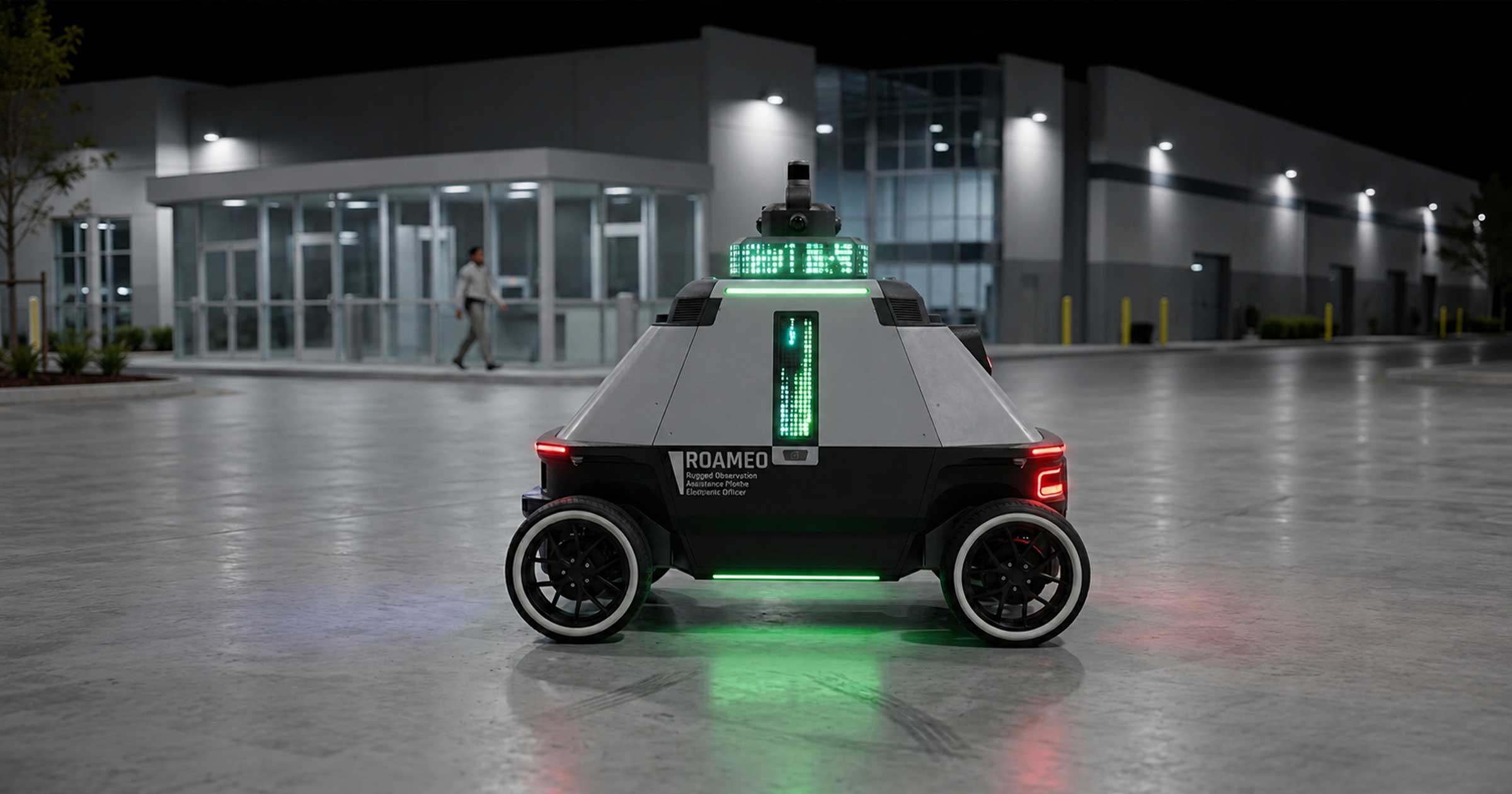
Black and white ROAMEO security robot with green lights parked outside a modern building at night.

Three forces squeeze every large operation.

They compound. Each one makes the others worse, and none of them is getting better on its own.

40%+
The people are not there to hire.

More than 40% of enterprise facilities report critical shortages of front-line staff. Overnight and remote posts are the hardest to fill and the first to go uncovered. You budget for a position, the position sits empty, and the coverage you paid for never shows up.

$25K–$60K
Round-the-clock coverage costs a fortune, and it climbs.

Staffing a single site 24/7 takes three to five people once you account for shifts, relief, and time off. That runs $25,000 to $60,000 a month per site before wage increases, benefits, and overtime. Every year the number goes up and you get the same coverage for more money.

35%+
Whoever you train is already leaving.

Front-line operations turnover runs above 35% a year across the industry. You live in a permanent loop of hiring, badging, and retraining, and the person who finally learned your site walks out the door. The knowledge of the property never compounds because the people never stay.

Turnover above 35% a year means new hires barely replace the ones leaving. Staffing does not scale.
Error and fatigue rise across long overnight shifts, and operational risk rises with them.
Wages, benefits, and overtime keep climbing with no structural fix in sight.
More people raises cost without improving coverage, consistency, or real-time visibility.

Adding people does not fix it. It just costs more.

The instinct is to throw headcount at the gap. The math does not cooperate.
The bill arrives in more than dollars.
Cost is the visible problem. The structural ones are worse, because they never show up on an invoice.
Coverage gaps
A guard covers one spot at a time. Between rounds, most of the site is unwatched, and incidents happen in the gaps.
Inconsistency
Coverage changes shift to shift and person to person. What gets checked on Monday is not what gets checked on Saturday.
No operational data
Manual patrols leave no record you can analyze. You cannot see patterns, prove compliance, or improve what you cannot measure.
Liability and risk
Missed events, slow response, and gaps in the record become incidents, claims, and exposure that land on the operation.

The shift from manual to autonomous operations.

The whole industry is moving through the same three stages. The leaders are already at the third.

01 / LEGACY
Human-led operations

Manual labor as the operating model. High cost, high turnover, inconsistent coverage, no operational data, and standing liability.

02 / HYBRID
Partial automation

Cameras and point tools bolt onto human teams. Some cost relief, limited AI and data, and a model that still depends on staffing.

03 / AUTONOMOUS
Autonomous operations

Autonomous systems take over routine monitoring and response. Coverage holds 24/7 with no fatigue, and operational data compounds with every site.

RAD-M is built to run fully autonomously.

The model has to change.

You cannot hire your way out of a structural problem. You change the model. RAD•M runs the patrol, the response, and the record as one autonomous operation, so coverage holds around the clock and the cost curve finally bends.

Request Deployment